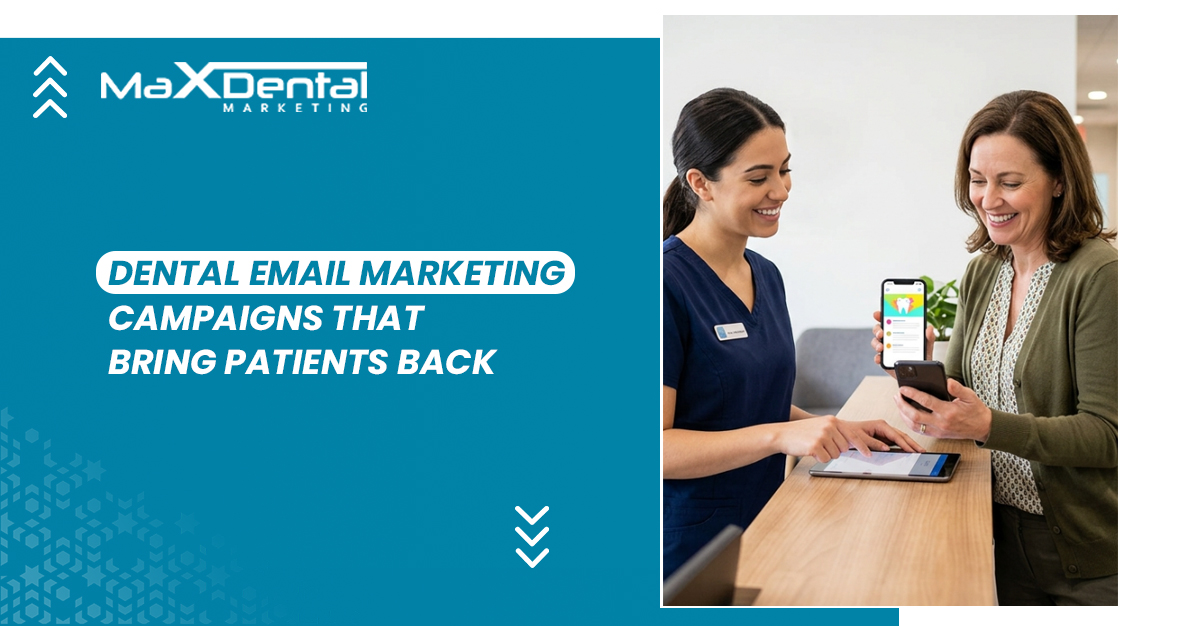

A patient leaves your chair, plans to schedule later, then quietly disappears from the calendar. Months pass, slots remain empty, and your practice pays to attract new patients while existing patients receive no meaningful reason or easy opportunity to return.
Patient-return email campaigns are planned communications for people at specific stages of their relationship with your practice. A coordinated dental email marketing campaign uses patient status, appropriate timing, relevant content, and a clear next step to encourage patients to reconnect with the practice.
These campaigns can support clinically timed recare, cancelled-appointment recovery, inactive-patient reactivation, treatment education, and the steady communication that helps valuable patient relationships remain naturally active over time.
Sending more emails won’t repair a missed follow-up by itself.
Effective patient retention depends on accurate records, thoughtful segmentation, respectful language, convenient booking, and a clear process for handling every incoming response.
Understanding why patients lapse is the first step toward recovering appointments without weakening the trust you’ve already earned.
Why Do Patients Disappear From the Schedule?
Patients may become inactive because they forgot to schedule, cancelled without rebooking, encountered cost or timing concerns, felt anxious about treatment, changed contact details, or didn’t understand why another visit was recommended. Their absence doesn’t automatically signal dissatisfaction.
Some patients fully intend to call later, but work, family responsibilities, and daily distractions intervene.
Others hesitate after hearing the cost of a recommended procedure, avoid care because of dental anxiety, or encounter limited office hours and a frustrating booking process.
Some have moved, transferred care, or simply need updated contact information.
A return campaign should never treat every inactive patient like a delinquent account. Accusatory language can damage a previously positive relationship and push a hesitant person further away.
Identify the likely barrier first, then shape the timing, reassurance, and next step around what may genuinely help that patient comfortably reconnect.
What Makes a Patient-Return Campaign Effective?
Effective patient-return campaigns identify the right recipient, acknowledge a relevant reason to reconnect, remove a practical barrier, and provide one convenient next step.
A practical approach to email marketing for dentists builds that discipline into six connected decisions:
- Correct patient: The record supports appropriate follow-up rather than relying on assumptions or a generic list.
- Relevant reason: The message reflects documented recare, cancellation, previous interest, or another meaningful status.
- Respectful timing: Communication follows the practice’s recommendations, patient preferences, and established campaign rules.
- Easy action: The patient can book, request a call, reply, reschedule, or update communication preferences without unnecessary steps.
- Defined exit: The sequence stops after booking, opting out, transferring care, reaching its contact limit, or requiring staff review.
- Human follow-through: A team member receives and acts on questions or replies that automation can’t handle appropriately.
Automation keeps outreach timely and consistent, but it still needs supervision. Records and circumstances change, and a workflow recognizes when a person should take over.
Who Should Receive Which Campaign?
List segmentation should reflect the patient record and each campaign’s purpose. Used thoughtfully, CRM software for dental clinics can organize appointment history, communication preferences, lead activity, and response status to prevent irrelevant outreach.
Also Read: How a Dental CRM System Improves Patient & Lead Management
Location matters. A nearby patient may value an open appointment, while someone connected to another branch needs its address, hours, booking route, parking, and travel details. Multi-location records should identify the appropriate practice.
| Patient status | Campaign objective | Suitable next step | Exit signal |
| Recare approaching | Encourage timely scheduling | Book or request an appointment | Appointment scheduled |
| Cancelled without rebooking | Restore the interrupted booking | Select another time | New date confirmed |
| Missed appointment | Reopen communication without blame | Reschedule or reply | Staff contact or booking |
| Inactive patient | Re-establish relevance and trust | Book, call, or update preferences | Response, opt-out, or sequence completion |
| Unscheduled recommended care | Support an informed decision | Ask questions or arrange a consultation | Consultation booked or status updated |
| New patient without a completed visit | Reduce uncertainty and first-visit friction | Complete forms or confirm attendance | First visit completed |
Review segments before every send. Don’t continue marketing to patients who transferred or ended care, and don’t assume everyone follows the same recare interval. Documented needs and status should govern campaign timing and content.
Which Campaigns Can Encourage Patients to Return?
Different patients need different reasons to reopen the conversation. Used strategically, dental email marketing can support several points in the relationship without making every message sound promotional, repetitive, or detached from the patient’s needs.
Clinically Timed Recare Campaigns
A recare message should follow the interval recorded or recommended by the practice, not an automatic six-month rule applied to everyone. The ADA guidance on individualized recall intervals supports care based on assessed needs.
Keep the wording neutral and include the preventive purpose, due-date context, available booking route, and an invitation to ask questions without exposing sensitive information.
Cancellation and No-Show Recovery
A cancellation and a no-show need different responses. Someone who cancelled may plan to return but needs a rescheduling option.
A patient who missed the appointment may feel embarrassed or expect a reprimand. Acknowledge that plans change, explain how to reconnect, and let staff handle any policy discussion separately.
Inactive-Patient Reactivation
An inactive-patient campaign can reach people with no upcoming appointment who haven’t visited within the practice’s defined activity window. Give them a credible reason to reconsider: easier online scheduling, extended hours, relevant practice improvements, preventive care, or an opportunity to discuss concerns.
A suitable returning-patient offer may help, but a familiar “We miss your smile” line can’t replace genuine relevance.
Unscheduled Treatment Education
Silence after a recommendation doesn’t always mean refusal. A short educational sequence can explain what the proposed care involves, why another conversation may be useful, and which questions the patient can bring back to the dentist.
It may also invite scheduling or financial discussions. Keep clinical decisions with the care team; email shouldn’t diagnose, frighten, or pressure someone into treatment.
Welcome and Post-Visit Retention
Patient retention starts before anyone becomes overdue. Welcome emails can reduce first-visit uncertainty with paperwork links, directions, contact details, expectations, and the next appointment step.
After a visit, approved general guidance can reinforce agreed next actions and keep questions from disappearing into silence. These messages help the relationship feel continuous rather than limited to time in the chair.
Relevant Practice and Seasonal Updates
Updates earn attention when they improve access or answer a current need. Mention extended hours, new providers, location changes, added services, or timely patient education. Benefits reminders need careful wording because plans differ.
Connect every update to a useful patient decision instead of broadcasting practice news with no clear next step.
How Should a Reactivation Sequence Progress?
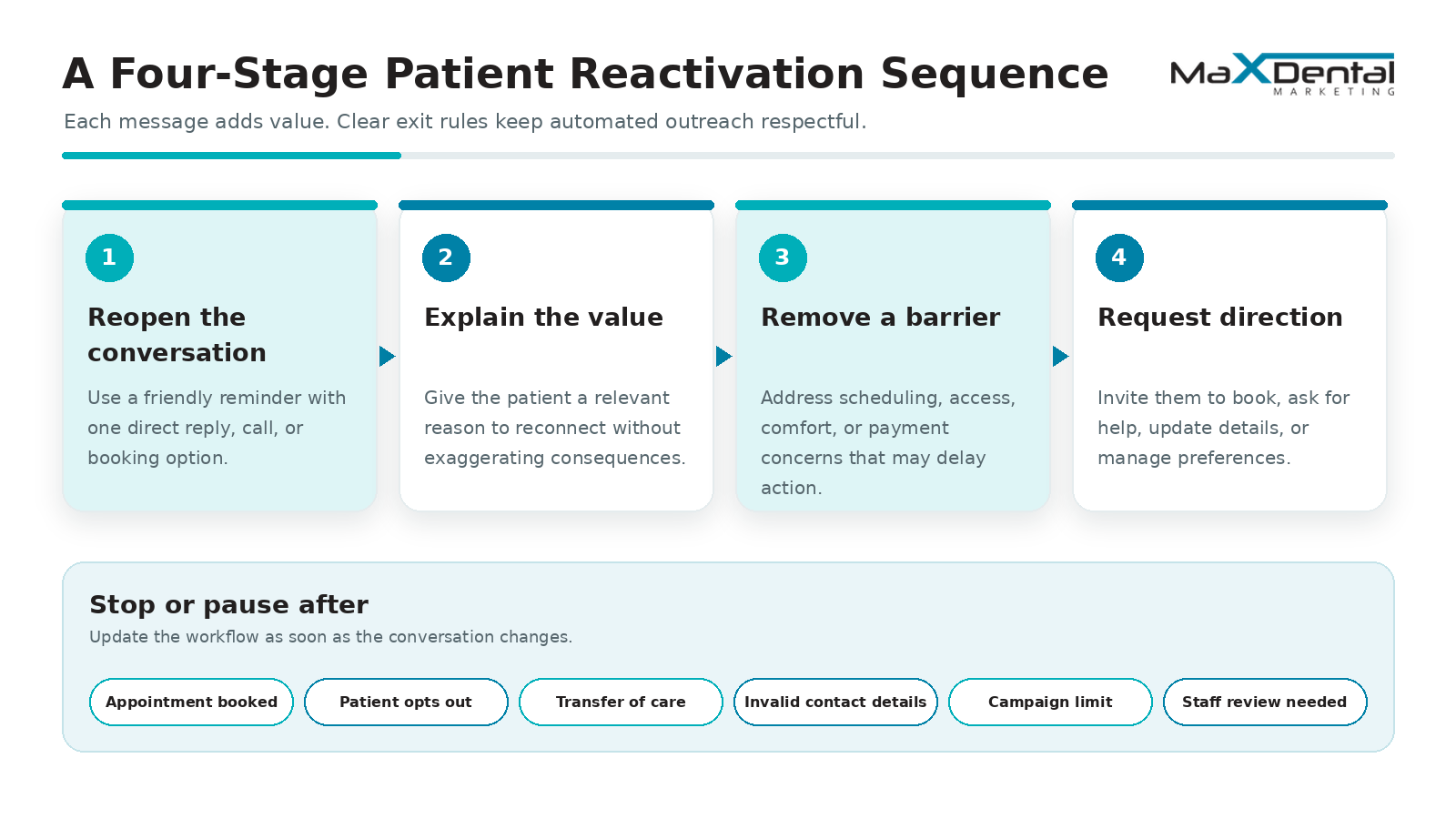
A reactivation sequence should reflect patient status and the practice’s ability to respond not a schedule copied across every list. Each contact should add useful information instead of repeating the reminder with greater urgency.
Test timing against the practice’s response patterns. Email may coordinate with calls or SMS where the patient prefers them and applicable requirements permit.
The sequence ends after a booking, opt-out, confirmed transfer of care, invalid contact details, or the established campaign limit. It also pauses whenever a patient response or status change requires staff review before further outreach.
Exit rules prevent automation from continuing after the conversation has changed.
What Should a Patient-Return Email Actually Say?
A useful patient-return email feels recognizable, relevant, and easy to act on. Include seven elements:
- Recognizable sender: Use the practice or provider identity patients know, not an unfamiliar marketing address.
- Accurate subject line: State the purpose without revealing private treatment details.
- Human opening: Write warmly without sounding automated, intrusive, or falsely familiar.
- Relevant reason: Explain why the practice is contacting them and what comes next.
- Useful reassurance: Address one likely concern about time, comfort, scheduling, or cost.
- One primary CTA: Ask them to book, reschedule, request a call, or reply.
- Necessary footer: Include accurate practice details, contact information, and required preference or unsubscribe options.
Frequent dental marketing mistakes include vague subjects, jargon, guilt, excessive copy, competing buttons, and untested links. These weaknesses can undermine a useful message, particularly on mobile.
Contrast a newsletter sent to the entire database with a cancellation-recovery message. The latter can name the location, offer a rescheduling method, and provide a monitored reply option. It addresses an interruption instead of hoping general content prompts a booking.
What Happens After the Patient Clicks?
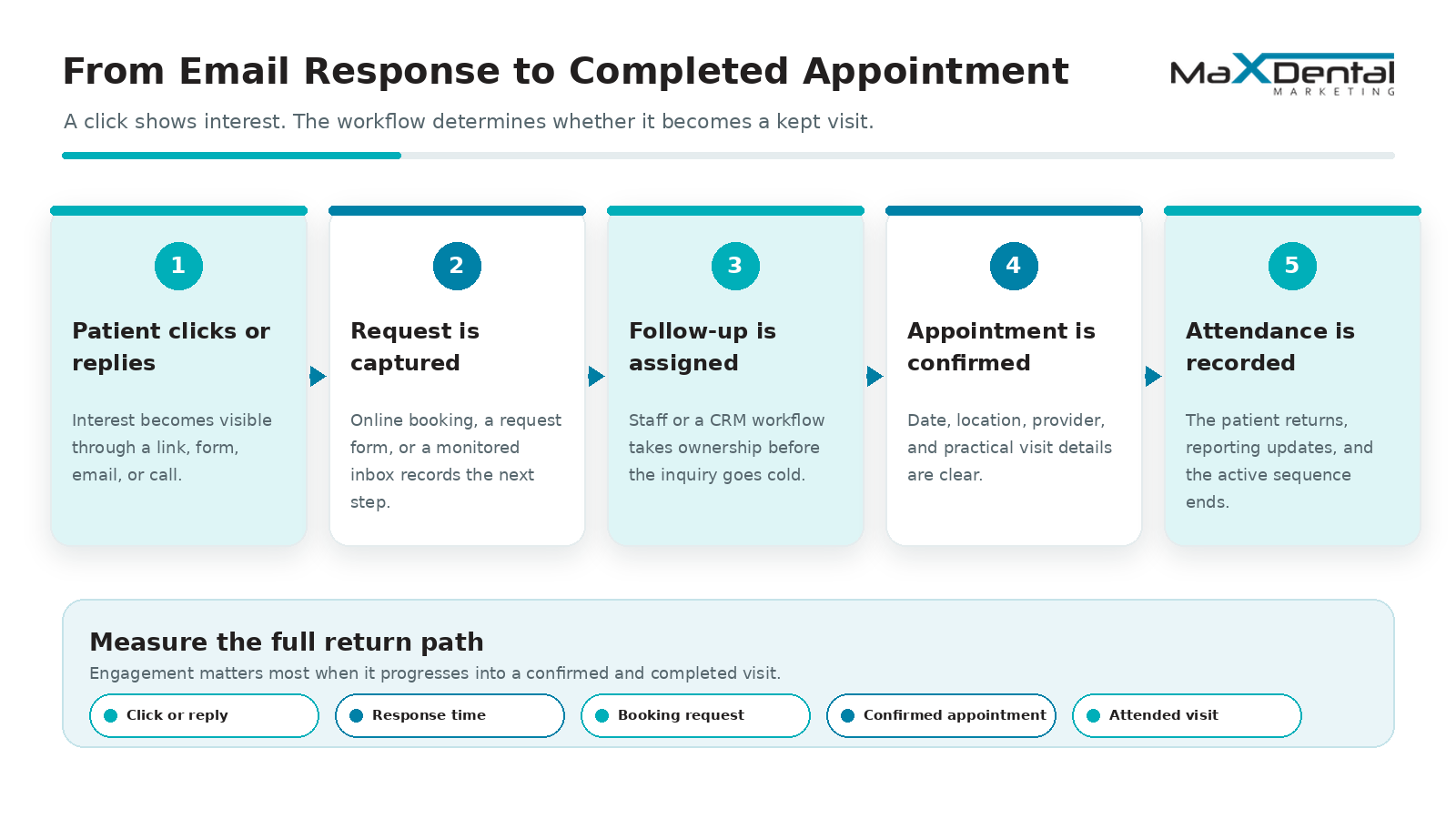
A click signals interest, not a conversion. The patient may encounter limited availability, a delayed reply, or a step that makes postponing easier than booking.
Next steps may include:
- Online scheduling or an appointment-request form
- A reply monitored by staff
- Telephone follow-up for questions
- CRM assignment to the appropriate team member
- Booking confirmation and practical visit details
- Removal from the active email sequence
 Max Dental Marketing connects customized email strategy, dental content, list segmentation, A/B testing, reporting, and continued optimization with patient-engagement services. This helps practices plan the message and the response it should produce.
Paid search serves a different moment. Google AdWords for dental practices may introduce prospective patients who don’t book during their first visit. CRM and email workflows can preserve the inquiry, continue communication, and give staff an opportunity to turn interest into an appointment.
Also Read: 5 Key Things Dental Practices Should Know Before Running Paid Google Ad Campaigns
How Can Practices Protect Patient Trust and Privacy?
Trust can disappear if a useful reminder reveals more than the patient expected. Responsible email marketing for dentists starts by separating three types of communication:
- General marketing messages promote the practice, services, or offers.
- Appointment or relationship communications support scheduling, confirmation, or an existing interaction.
- Messages involving protected health information may require safeguards, permissions, technology, and vendor arrangements.
The HHS Summary of the HIPAA Privacy Rule explains uses and marketing limits.
We can keep campaigns without placing sensitive details in an inbox. Verify addresses, subject lines, and preview text, and include what the message needs. Keep secure clinical communication separate from general promotion.
HHS guidance on online tracking technologies helps practices assess vendors, tools, agreements, and disclosures before adding campaign tracking.
Commercial campaigns need accurate sender information, appropriate permissions, and opt-outs. The FTC CAN-SPAM compliance guidance explains subject-line, postal-address, and unsubscribe requirements.
Federal rules aren’t the only consideration. Review applicable state requirements and ask qualified professionals to assess workflows. This is general marketing guidance, not legal advice.
Which Metrics Show That Patients Are Returning?
Booked and completed appointments provide a clearer measure of patient reactivation than email opens alone.
A useful dental email marketing report groups performance into three levels:
Delivery health
- Successful delivery
- Bounce rate
- Spam complaints
- Unsubscribes
Message engagement
- Click rate
- Replies
- Booking-page visits
- CTA performance
Practice outcomes
- Appointments requested
- Appointments booked
- Reactivated patients seen
- Cancelled appointments recovered
- Relevant treatment conversations resumed
- Revenue reasonably attributed to the campaign
Delivery metrics show whether the campaign reached an audience. Engagement reveals interest or friction. Practice outcomes complete the picture by connecting messages with requests, bookings, kept visits, recovered cancellations, resumed conversations, and revenue.
Open rates can diagnose sender recognition and subject-line performance, but privacy protections and automated activity may distort them. Opens don’t prove patient return if nobody requests or attends an appointment.
Compare segments, offers, timing, and CTAs against the practice’s baseline rather than conflicting industry averages. Internal trends offer clearer optimization clues when reporting connects email activity with booking and attendance records.
Should You Manage Campaigns Internally or Seek Help?
Internal management can work if your practice has clean data, suitable technology, compliance oversight, and time for strategy, content, design, approvals, testing, and reporting. Someone must own patient replies so questions and booking requests don’t sit unanswered.
Outside support becomes practical when these responsibilities compete with patient care. A dental marketing company can help segment lists, create campaigns, manage workflows, test content, and interpret performance consistently. Base the decision on resource gaps, not an assumption that every practice needs the same arrangement.
Evaluate potential partners for dental-industry understanding, customized strategy, defined deliverables, responsible patient-data handling, and a clear content approval workflow. Reporting should connect campaign activity to appointments, while plans or contract terms should provide appropriate flexibility.
Ask who owns each task, how your team participates, and what happens after a patient responds. Support should add accountability without reducing visibility into patient relationships.
Bring More Patient Relationships Back Into Motion
Patient reactivation doesn’t need to begin with the entire database. A focused review can reveal relationships needing attention, barriers to their return, and a practical first campaign your team can support.
Max Dental Marketing brings dental-specific expertise to strategies shaped around your goals and patient base. We provide campaign strategy and implementation, dental email copy and creative development, list segmentation, A/B testing, analytics, reporting, and continued monitoring and optimization.
Our services include CRM and patient engagement. Our email service carries no long-term contracts. Share what’s happening in your schedule, which patients you want to reconnect with, and how your team follows up.
Call (336) 278-1629 or schedule a free consultation to review your data, identify a practical first campaign, and build a more consistent route from inbox to appointment.
Frequently Asked Questions
Can our practice begin with one patient segment?
Yes. A pilot aimed at overdue recare patients or cancelled appointments can reveal data problems, test how your team handles responses, and establish performance benchmarks before expanding the program to other segments.
What information is needed before a campaign can launch?
We’ll need a clear campaign objective, current patient-list status, brand materials, approved services, booking process, communication preferences, staff response plan, and details about any required compliance, privacy, or clinical review before sending.
Can we keep using our current patient list?
Possibly, but it should first be reviewed for accuracy, marketing permissions, duplicate contacts, invalid addresses, recorded opt-outs, and segmentation fields that reliably distinguish each patient’s status and communication needs before campaign use.
Will the emails match our practice’s voice and branding?
Yes. Customized campaigns should reflect your visual identity, services, audience, preferred tone, and actual patient experience. They shouldn’t resemble generic dental templates that could have come from any other dental practice nearby.
Can our team approve content before it’s sent?
Your team should retain an appropriate approval role. During onboarding, confirm the review stages, included revisions, responsible internal approvers, final authorization process, and procedure for correcting urgent or inaccurate information before launch.
Can campaigns be separated by provider or location?
They may be, provided the underlying records identify the relevant office, provider, patient relationship, booking route, and contact details clearly enough to prevent messages from directing people to the wrong location.
What reporting should a dental practice receive?
Expect campaign-level reporting covering delivery, bounces, clicks, replies, booking activity, reactivation outcomes, testing insights, and practical, prioritized recommendations for the next campaign optimization cycle not an isolated open-rate total without appointment context.
What determines setup time and campaign cost?
Setup time and cost typically reflect list condition, campaign volume, automation complexity, content and design requirements, system connections, approval timing, expected sending volume, compliance review, and the level of ongoing campaign management.