
A prospective patient finds your practice, opens the website, reads two reviews, and searches for insurance information. A minute later, they disappear without calling. Your analytics record another anonymous visit, while a competitor quietly receives an appointment that was nearly yours.
What caused the loss when your practice was already visible?
Patients begin building trust before they speak to your team or sit in the dental chair. Online dental trust is the confidence that shapes how patients find dentists, compare their options, and decide whether a practice feels credible enough to contact. Reviews, credentials, clear communication, practical information, and timely responses become stand-ins for care patients haven’t experienced yet.
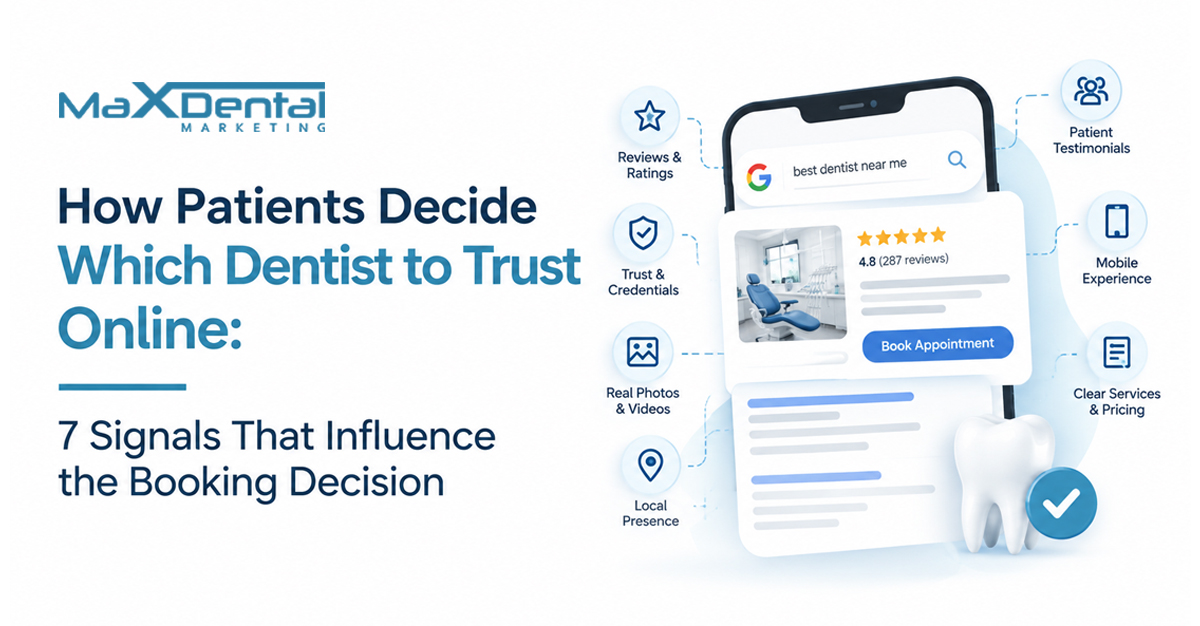
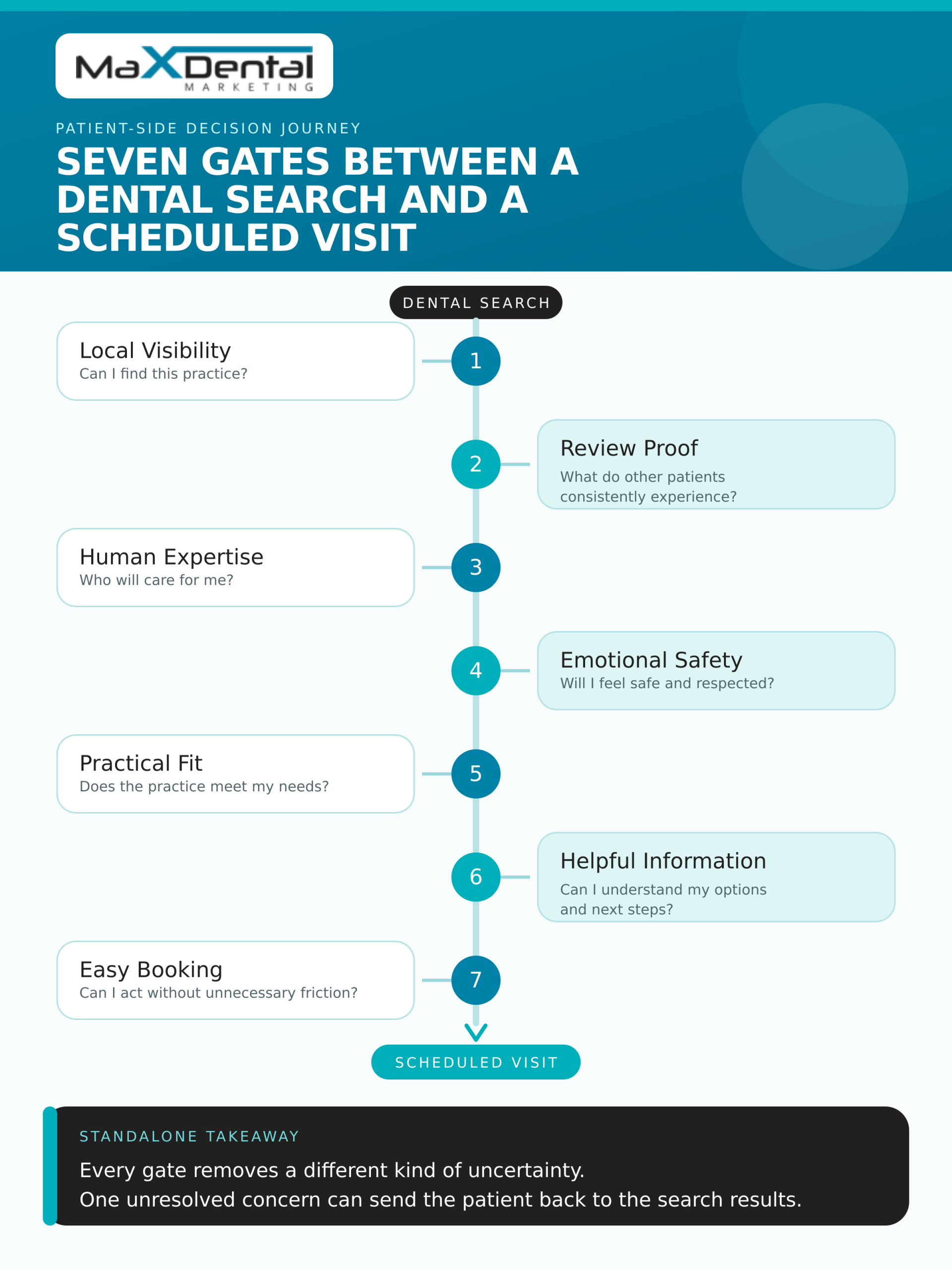
Each signal answers a different concern, and the signals work best as a connected path rather than decorative badges scattered across a website. Examining that path helps you recognize what patients evaluate, repair gaps that create doubt, convert existing attention more effectively, and support appointments, retention, and sustainable marketing returns.
Patients Use Visible Evidence to Judge What They Can’t Yet Experience
Prospective patients can’t inspect clinical technique through a Google result or know how carefully a dentist will treat them. Before making contact, they rely on details they can see, understand, and compare.
Those details help them answer five personal questions:
- Does this practice appear competent?
- Will I feel safe and respected?
- Can it meet my specific need?
- Will costs and next steps be explained?
- Can I arrange care without unnecessary difficulty?
No single accreditation badge, five-star testimonial, or polished homepage can settle all five concerns. Confidence develops as the patient moves between the search listing, website, reviews, team profiles, service information, and booking process.
Consider two nearby practices offering the same procedure with similar ratings.
- One uses stock photos and little guidance.
- The other provides team images, treatment information, payment details, and a direct appointment route.
Verdict? The second practice gives patients reasons to feel informed, reassured, and ready to act.
Visibility Earns a Place on the Patient’s Shortlist
Keep Every Local Detail Current and Consistent
Visibility doesn’t win the appointment, but it determines which practices enter the comparison. The earliest stage of how patients find dentists often begins across Google Maps, local organic results, paid search listings, online directories, referral follow-up searches, and AI-generated local recommendations.
Patients may scan location, hours, reviews, photos, services, and contact options before visiting a website. A wrong phone number, conflicting address, or outdated hours can make a credible office look inattentive or difficult to reach.
Keep that first impression accurate:
- Complete every relevant Google Business Profile field.
- Keep the practice name, address, and phone number consistent.
- Update regular, holiday, and emergency hours.
- Direct listings to the relevant service or location page.
- Add current practice and team photographs.
- Test each search-to-website path on mobile.
Effective dental SEO services in the USA should connect accurate local visibility with relevant website content and a smooth patient journey—not chase rankings alone.
Also Read: What Dentists Should Know About Local Keywords and Search Intent to understand how local dental search intent influences discovery.
Review Patterns Reveal the Experience Behind the Rating
Patients Read for Reassurance, Not Stars Alone
A star rating creates a fast impression, but the written reviews often determine whether a patient can picture walking through the door. People read for repeated clues about gentle care, friendly staff, clear explanations, reasonable waiting times, simple scheduling, billing and insurance support, unwanted treatment pressure, and respect for anxiety.
Those details turn someone else’s visit into a preview of their own. US research on dental patient reviews and experience analyzed online information for 204,751 dentists and found that patient feedback frequently reflected communication, comfort, appointment access, wait times, pain, costs, and perceived high-pressure selling.
Respond for Everyone Reading, Not Only the Reviewer
Your response also becomes evidence. A calm reply can show professionalism to every future reader, but privacy still applies.
Never confirm that a reviewer received care or discuss treatment, insurance, billing, or appointment details publicly.
- Invite honest feedback consistently.
- Don’t buy, reward, or filter reviews.
- Track recurring concerns instead of fixating on one complaint.
- Keep replies brief, empathetic, and privacy-conscious.
- Move individual concerns into a private conversation.
The ADA guidance for managing dental practice reviews recommends broad, non-identifying replies and reminds practices that a reviewer’s own disclosure doesn’t waive patient privacy.
Respond with care, then invite direct contact without turning a public platform into a detailed treatment conversation.
Real People and Verifiable Expertise Lower the Perceived Risk
Show Who Provides Care and What Supports Their Credibility
Patients researching how to choose a dentist often look for proof they can verify rather than another unsupported “best dentist” claim. Dentist and team profiles can provide that proof through education, relevant credentials, clinical experience, professional affiliations, and real team and office photography.
Other evidence deepens the picture:
- Explain technology through the comfort, precision, or convenience it may offer patients.
- Publish before-and-after examples only with suitable consent and accurate context.
- Use short video introductions to let patients hear the dentist’s tone and communication style.
Translate Credentials Instead of Merely Listing Them
A credential earns attention when the reader understands why it matters. Connect each qualification to the treatments it informs, the concerns it helps address, or the decisions it equips the dentist to discuss.
A string of initials without explanation may impress another clinician while telling a nervous patient very little.
Research on trust and distrust in dental professionals offers useful context. Among 25 participants, trust was associated with technical skill, pain reduction, current technology, reputation, transparent communication, empathy, and involvement in decisions.
The small sample identifies themes rather than universal percentages.
Reassurance Should Begin Before the Patient Reaches the Chair
Answer the Fears Generic Service Pages Leave Untouched
A dental search can carry emotions patients rarely voice. Fear may center on pain, judgment after delayed care, losing control, unexpected costs, treatment pressure, or uncertainty about what happens next.
Generic service pages that describe procedures without addressing those concerns can leave clinically suitable patients feeling unseen. Patients may abandon the page rather than admit discomfort, so silence shouldn’t be mistaken for a lack of concern.
A 2026 meta-analysis of dental anxiety among adults covering 19 studies and 9,267 adults estimated that 18% experienced high dental anxiety, although results varied substantially between studies. The finding also shows why reassurance deserves deliberate attention; it doesn’t predict the anxiety level within every practice.
Use Calm Language Without Making Comfort Guarantees
- Explain procedures in plain language.
- Walk patients through a first visit or consultation.
- Write anxiety-aware service content.
- Share an office-tour video.
- Introduce staff with real photographs.
- Invite patients to discuss fears and preferences.
- Speak about delayed care without blame.
Consistent practice branding services bring visual identity, tone, photography, and messaging into one reassuring experience.
Max Dental Marketing can align that experience with patient-facing communication across your website, search profiles, social channels, and appointment touchpoints, helping patients encounter the same respectful voice wherever they find you.
Practical Clarity Helps Patients Confirm the Practice Fits
Make Decision-Stage Details Easy to Find
Trust fades when patients can’t confirm practical fit. Make relevant treatments, new-patient availability, locations, hours, emergency arrangements, insurance, payment and financing routes, accessibility, spoken languages, parking guidance, estimate preparation, and first-visit expectations easy to find.
Patients shouldn’t have to call to locate basic answers.
Different Patients Prioritize Different Proof
| Patient intent | Immediate concern | Proof needed first |
| Dental emergency | “Can someone help me soon?” | Hours, location, direct contact, availability guidance |
| Routine or family care | “Will this fit daily life?” | Reviews, insurance, convenience, team, ongoing services |
| Implant or cosmetic care | “Can I trust this investment?” | Credentials, case examples, process, costs, consultation |
| Anxious returning patient | “Will I be judged or rushed?” | Empathy, comfort approach, patient stories, clear expectations |
Price transparency doesn’t require publishing fixed fees that may be misleading. Explain the factors affecting treatment costs, how estimates are prepared, when insurance benefits can be verified, and which payment pathways are available.
Clear boundaries are more credible than vague affordability claims or promises a practice can’t honor.
Also Read: Dental Website Design Mistakes That May Be Turning Patients Away
Helpful Content Turns Expertise Into Something Patients Can Use
Build Decision-Support Pages, Not Digital Brochures
Thin service pages may identify a treatment yet leave the patient’s real objections unanswered.
A genuinely useful decision-support page explains:
- Who might consider the service
- What happens during the consultation
- Which stages the treatment may involve
- What questions patients can ask
- Which factors affect timing and cost
- What alternatives may be discussed
- What follows an online enquiry
Consider an implant page that lists equipment and technology. It offers less reassurance than a page explaining the consultation, assessment, treatment planning, recovery guidance, and payment discussion.
Patients aren’t only assessing equipment; they’re trying to understand the experience and decide what to ask next.
Keep the Message Consistent Across Every Touchpoint
Content should remain consistent across the website, Google listings, advertisements, social posts, emails, and telephone conversations. Contradictory treatment descriptions or offers can make patients question which information to trust.
Thoughtful website development services for dentist practices can connect these touchpoints through clear, logical page journeys, consistent language, and practical next steps. That consistency helps the practice sound organized and dependable before a patient speaks with the team.
Also Read: Seven Essential Dental Website Features a Practice Shouldn’t Miss
Booking Convenience Becomes the Final Trust Test
Remove Friction Between Intent and Confirmation
Patients who want to schedule dentist appointment online shouldn’t have to search through several pages, create an unnecessary account, or wait without knowing whether their request was received. Convenience becomes evidence that the practice respects their time and is prepared to respond.
Remove avoidable friction by providing:
- Visible click-to-call buttons and one clear appointment CTA
- Short mobile forms with essential fields
- Online request or booking options, live chat, and after-hours enquiry capture
- Fast response standards, acknowledgement, and appointment confirmation
- First-visit instructions and follow-up on missed calls or incomplete enquiries
Picture a patient researching treatment after office hours. They submit a request but receive no email, text, or indication of what happens next. Uncertain the following morning, they contact another practice and book as soon as its team confirms receipt.
The human handoff must support the promise made online.
A hurried greeting, unanswered call, vague availability, or delayed form response can undo the previous six signals. Review the path regularly on both mobile and desktop, including what patients receive after pressing “submit.”
Also Read: Why Mobile-Friendly Dental Websites Generate More Appointments
Fix Trust Leaks Before Spending More to Feed Them
Measure the Path From Impression to Attended Appointment
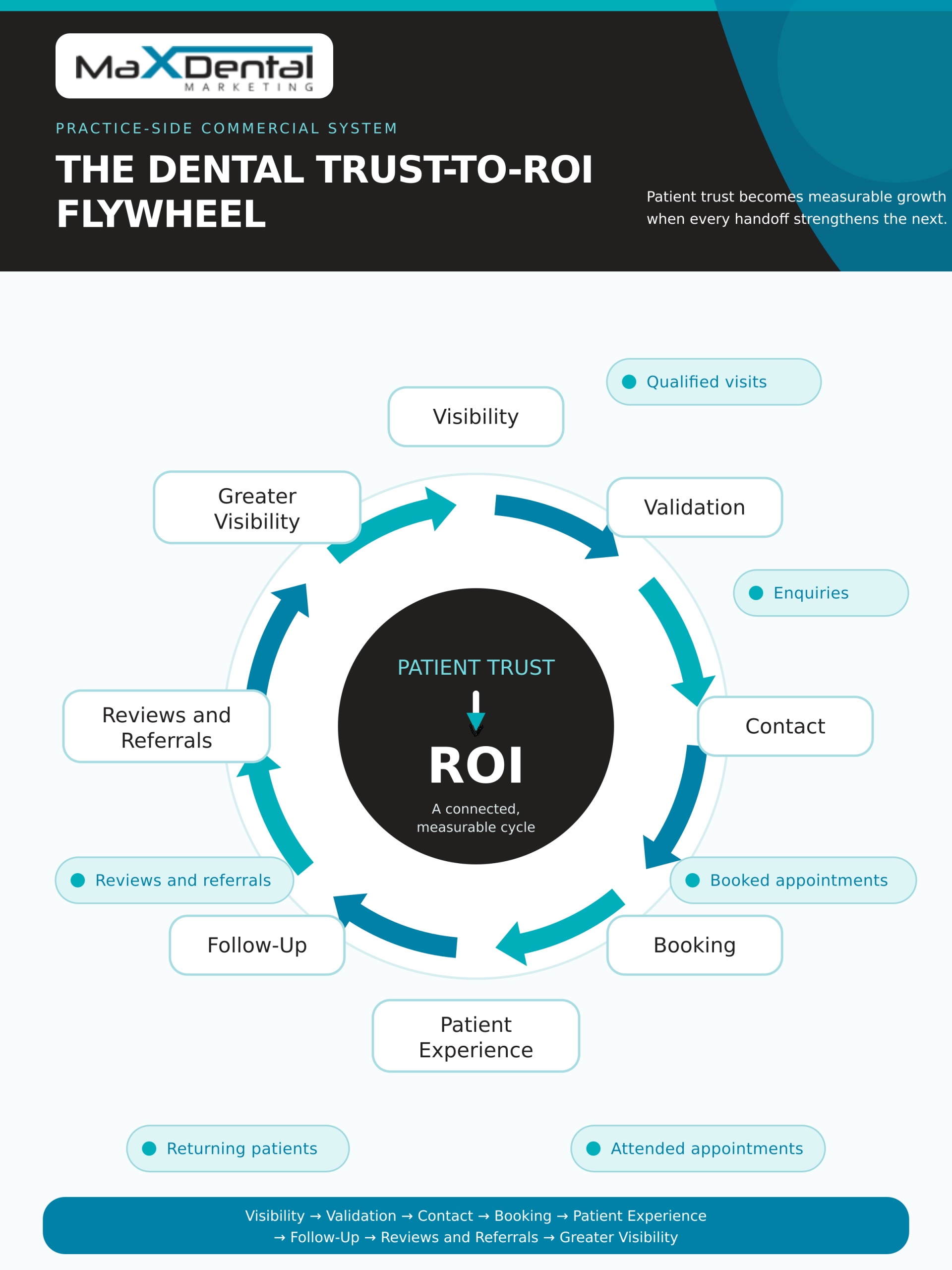
A clear view of how patients find dentists should continue beyond clicks and form submissions to booked and attended appointments. Relevant traffic can leak revenue through weak messaging, slow replies, missed calls, confusing forms, or limited follow-up.
Trace Each Leak With an Outcome
Review each stage as one path. Click totals mean little if enquiries go unanswered or confirmations never arrive.
| Stage | Possible trust leak | Metric to review |
| Search result | Inaccurate or unconvincing listing | Profile views, calls, website clicks |
| Website visit | Weak relevance or reassurance | Engagement and contact starts |
| Enquiry | Slow or missed response | Response time and contact rate |
| Scheduling | Confusing next step | Enquiry-to-booking rate |
| Appointment | Poor confirmation process | Cancellation and show rate |
| Ongoing care | Weak follow-up | Recall, retention, reviews, referrals |
Repair Conversion Before Raising Spend
An implant campaign may generate enquiries that remain unanswered until the following day. More budget would feed the same leak.
Effective performance marketing services for dentist practices should connect advertising data, landing-page behavior, and front-desk outcomes. Paid promotion can expand visibility, but it can’t repair a broken conversion path. Fix lost confidence before investing more.
Turn Patient Research Into Confident Appointments
Prospective patients don’t separate SEO, reviews, website content, branding, and scheduling into marketing categories. They experience one practice across several touchpoints. Every clear detail, reassuring answer, and responsive interaction reduces uncertainty; every contradiction, delay, or missing next step gives doubt room to grow.
As a dental digital marketing agency, Max Dental Marketing can help connect your visibility, website, patient engagement, and appointment process around the decisions that matter to patients.
Share your website, review profile, and booking challenges, then contact or call our team to discuss current conversion concerns.
Schedule a free consultation, and let’s get started on a strategy that turns patient interest into measurable enquiries and attended appointments.
Frequently Asked Questions
What does a dental practice trust audit examine?
A dental practice trust audit reviews local visibility, online reputation, website messaging, patient proof, practical details, contact options, response handling, and what happens between an enquiry and a confirmed appointment.
Can a dental practice gain more appointments without buying more traffic?
Yes, sometimes. Fixing unclear pages, difficult forms, missed calls, or slow responses may help existing qualified visitors act. Start by recording current traffic, enquiry, booking, and attendance figures.
Which metrics should a dental marketing report include?
Useful reports connect marketing activity with patient outcomes. Review local profile actions, qualified visits, calls, forms, chats, response times, booking rates, attendance, cost per booked patient, and retention.
Should one partner manage the website, SEO, advertising, and patient follow-up?
One partner can improve consistency across these areas. Before hiring, confirm responsibilities, reporting methods, account ownership, data access, patient-information safeguards, approval steps, and how the different services work together.
Does an older dental website always need a complete rebuild?
No. An older site may only need clearer content, easier navigation, faster mobile performance, or better appointment routes. A rebuild makes sense when technical limits or outdated branding restrict meaningful improvements.
How should a multi-location dental practice present trust online?
Give every location accurate hours, services, contact routes, team information, reviews, and arrival details. Create genuinely useful local content instead of copying the same page and changing only the place name.
What should a dentist prepare for a free marketing consultation?
Bring your practice goals, priority services, target patients, locations, current lead sources, approximate budget, recent reports, appointment capacity, and known booking problems. You won’t need passwords for the initial conversation.
How long does improving online patient trust take?
Some factual corrections and booking improvements can happen quickly. Reputation, search visibility, content authority, and follow-up systems develop over time, so a credible partner shouldn’t promise fixed ranking or revenue deadlines.