
Managing patient relationships and leads effectively is one of the biggest challenges dental practices face. Many practices struggle with fragmented data, missed follow-ups, and inefficient workflows.
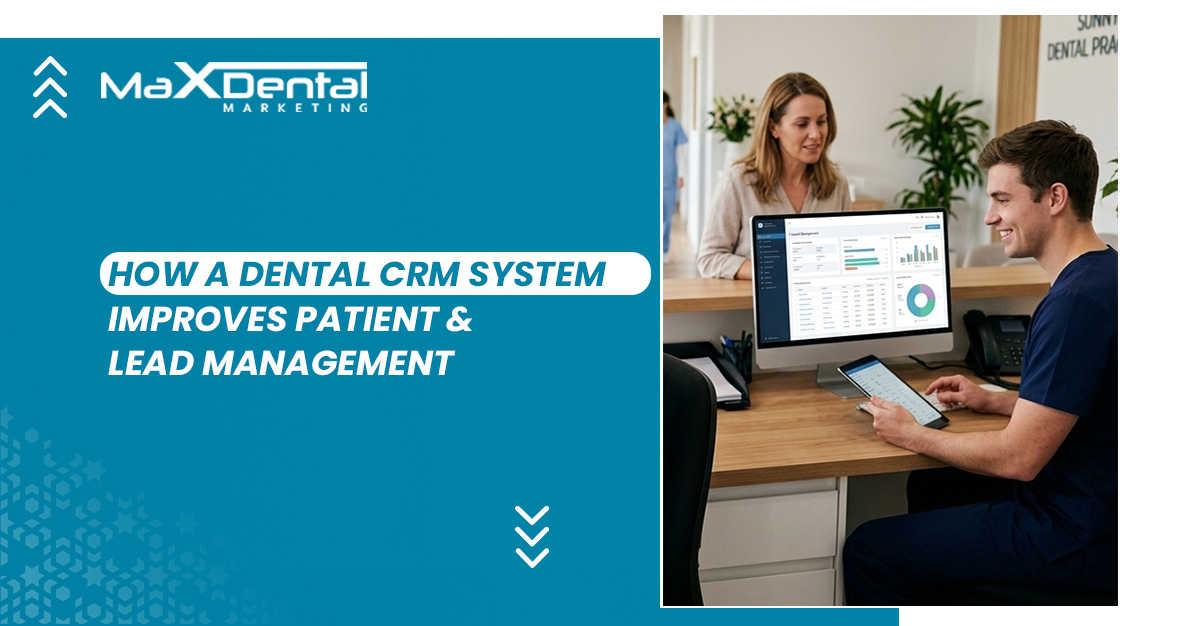
A CRM system for dental practice addresses these challenges by centralizing communication, tracking patient interactions, and automating repetitive tasks. The result is a more organized, professional, and growth-focused dental practice.
A CRM is more than software—it’s the backbone of patient engagement, connecting marketing efforts, front-desk workflows, and patient follow-up in one seamless system.
Without a centralized system, even high-performing marketing campaigns can lose potential patients to delays, missed calls, or manual errors.
When implemented as part of a broader strategy centered on dental marketing solutions for dental clinics, a CRM ensures that every lead generated through marketing is consistently tracked, nurtured, and converted.
Table of Contents
ToggleWhy Practices Need a Dentist CRM System
Patients interact with a practice across multiple channels: website inquiries, phone calls, live chat, and in-office visits.
Each touchpoint generates data, but without a structured patient management CRM, it’s easy for leads to get lost, follow-ups to be delayed, and revenue opportunities to slip through the cracks.
Key benefits of a dentist CRM system include:
- Centralized patient data for quick access by staff
- Automated reminders for appointments and follow-ups
- Tracking lead sources to measure marketing performance
- Structured workflows that reduce manual errors
By consolidating patient information and lead activity, a dental practice CRM ensures that every patient receives timely, personalized communication, improving satisfaction and retention.
Streamlining Communication Across the Patient Journey
Modern dental CRM software integrates with phone systems, email, online booking, and live chat. This integration allows practices to see every interaction in one place, making it easier to respond quickly and professionally.
For example, if a patient submits a web form or requests information via live chat, the CRM automatically logs the inquiry and triggers follow-up actions, ensuring no lead is overlooked.
Practices using a CRM notice that staff spend less time chasing information and more time engaging with patients.
It creates a consistent experience in which inquiries are responded to promptly, and patients feel valued at every touchpoint.
Improving Lead Conversion
A CRM system for dental practice doesn’t just organize data—it actively supports patient conversion. Leads captured from marketing campaigns or website visits can be categorized, prioritized, and assigned to team members for follow-up.
The system also tracks communication history, so each interaction builds on the last, creating a personalized patient experience.
How a CRM improves lead management:
- Prioritizes high-intent leads for immediate action
- Automates reminders for follow-up calls or emails
- Provides analytics on which campaigns generate the most qualified leads
- Reduces the risk of losing leads due to delayed responses
When combined with tools such as live call answering or dental website chat, a patient management CRM ensures every lead has the best chance of booking an appointment.
Enhancing Patient Retention and Loyalty
Retention is just as important as acquisition. A dental practice CRM helps clinics maintain long-term relationships by tracking appointments, follow-ups, and patient preferences.
Personalized reminders for routine check-ups, treatment plans, or special offers demonstrate care and professionalism, keeping patients engaged over time.
Additionally, CRMs can provide actionable insights into patient behavior, highlighting trends such as popular procedures, peak scheduling times, and common questions.
This data allows staff to proactively address patient needs, anticipate concerns, and deliver a superior patient experience.
Turning Data Into Better Decisions for Long-Term Growth
A major advantage of using a CRM system for dental practice is the ability to turn everyday interactions into actionable insights. Every phone call, chat, form submission, and appointment request generates data.
Without structure, that data stays scattered and underused. With the right system in place, it becomes a clear roadmap for more thoughtful decisions.
A well-configured dental CRM helps practices understand which marketing channels generate the most qualified leads, where patients drop off in the booking process, and how quickly teams respond to inquiries.
Over time, this visibility allows dentists to refine patient management workflows, improve follow-up timing, and allocate marketing budgets more effectively.
Instead of guessing what’s working, practices can rely on real performance metrics such as response times, conversion rates, and appointment outcomes.
This level of insight supports steady, intentional growth rather than reactive changes. When combined with other systems such as call answering and appointment coordination, a CRM ensures decisions are driven by clarity, not assumptions, creating a more confident and scalable path forward for the practice.
Measuring Performance and ROI
One of the most powerful aspects of a CRM system for dental practice is its reporting capabilities. Practices can track:
- Conversion rates from leads to booked appointments
- Response times and follow-up efficiency
- Performance of marketing campaigns
- Patient satisfaction trends
By analyzing these metrics, practices can make informed decisions about staffing, marketing strategies, and operational improvements.
A CRM transforms patient and lead management from guesswork into a data-driven process, increasing efficiency, revenue, and patient satisfaction.
Integrating Dental CRM Software Into a Marketing System
A dental CRM software works best when integrated with other practice growth tools:
- Live call answering ensures all incoming inquiries are captured and logged in the CRM
- Live chat for dental clinics engages website visitors in real time and funnels them into the CRM
- Appointment setting services ensure qualified leads are scheduled promptly
When all these tools work together, practices create a fully connected patient journey that maximizes lead capture, improves retention, and drives measurable growth.
Build a Smarter Patient Management Framework
A CRM system for dental practice plays a critical role in creating organized, scalable growth. By consolidating patient information, lead activity, and communication history into a single system, dental practices can reduce missed follow-ups and improve daily efficiency.
When marketing efforts are directly connected to operations, teams gain better visibility, patients receive timely responses, and growth becomes more predictable.
Integrating a dental CRM with live call answering, chat support, and appointment coordination allows practices to manage demand without adding internal strain.
This connected approach helps dental teams focus on care while ensuring every inquiry is handled professionally and consistently.
Looking for clarity across your patient journey? Schedule a consultation to discover how the right CRM system can bring order, consistency, and confidence to your practice operations.